
You got the job. The promotion. The credential. The praise. And somewhere in the back of your head, a voice is already drafting the correction: they don't know the real you yet, you got lucky, and it's only a matter of time before everyone figures out you've been faking it.
This is online therapy for women who are objectively crushing it and privately convinced they're one meeting away from being found out. If your résumé says "expert" and your inner monologue says "fraud," call me.
Online Therapy For Women Experiencing Imposter Syndrome in PA & NJ
Are you struggling with Imposter Syndrome?
Let's run the tape. You walk into the room qualified — genuinely, verifiably qualified — and your body acts like it snuck in through a window. You over-prepare for the thing you could do in your sleep. You attribute every win to timing, luck, or someone's low standards, and every stumble to proof of what you secretly are. When someone compliments your work, you don't hear "well done." You hear "phew, fooled them again."
Here's the part that makes it so sneaky: imposter syndrome doesn't feel like insecurity. It feels like information. It arrives dressed as humility, as realism, as "just being honest about my limitations." It doesn't announce itself as a distortion. It announces itself as the truth everyone else is too polite to say.
It's not the truth, lady. It's an old belief wearing a very convincing lanyard.

Several attachment styles. Several strategies/tools in the tool box. Coincidence?
Imposter Syndrome Isn't Humility. It's Shame With a Business Casual Dress Code.
"I'm just anxious in relationships." "I'm bad at letting people in." "I always pick the wrong ones." Women hand me these lines like they're personality diagnoses, and they shouldn't be, because they're not traits. They're strategies! Or defense mechanisms, tools in your tool box, whatever— I use these interchangeably.
Picture this: you were a baby with needs and zero ability to meet them yourself. Whoever took care of you responded somehow (consistently or unpredictably, warmly or with discomfort, reliably or depending on their mood). Your nervous system took meticulous notes on all of it, long before you had words for any of it, and it drew a conclusion: this is how closeness works, and this is what I have to do to keep it.
That conclusion became your attachment style, your strategy for physical and emotional survival, your strongest tools in your tool box for navigating life and its people. It was genuinely smart because it got you the maximum available connection from the situation you were actually in. But it never got an update. So now you're an adult, applying a strategy designed for one specific childhood to every relationship you've had since.
This works if everyone is your mother and you’re applying the same defenses and strategies against them as you are her. It doesn’t fly when your partner is begging you to stop yelling and your nervous system keeps anticipating your partner to be like Dad. See the issue?
Sassy truth: the pattern that's sabotaging your relationships now is the same one that protected you then. That's why it won't respond to willpower, self-criticism, or one more relationship podcast. Strategies don't retire because you're annoyed with them. They retire when your nervous system gets new evidence! And that's exactly what therapy with me provides.

YOUR SASSY SHRINK
Let’s read your blueprint
I'm a Licensed Professional Counselor (LPC) and I've spent years sitting with women who walked in saying "I don't get it. He was great. It was going well. And I torched it." Or the reverse: "I know this relationship isn't meeting my needs, so why can't I leave?" Both of those have the same answer, and it's not the one your inner critic has been offering.
✓ You cannot scare me off: not with your anxious spiral, your ghosting history, or your push-pull greatest hits. I've seen every blueprint and I care for you anyway. I won’t chase you and also, I will do my part in this therapeutic relationship.
✓ We meet online, in a confidential, judgment-free space of your choosing — and yes, the therapy relationship/alliance itself becomes practice ground because your attachment style will show up here too, and that's awesome info
✓ You get therapeutic TLC built for you as we attach therapeutically to each other and practice in real time how to have a healthy connection that suits you
What you can expect from me:
We map your pattern. What do you do when someone gets close? When someone pulls away? What story does your body tell you about whether you're safe? Then we look at where the pattern shows up now: romantic relationships, friendships, work, even your relationship with yourself.
Then comes the slower, braver part: practicing something different, in real relationships, in real time. This is where Homeplay comes in — small, doable practices between sessions that give your nervous system new data. Insight tells your brain something. Practice tells your nervous system something. You need both, my girl.
Pricing
Affordable rates; No hidden costs; Discounted packages
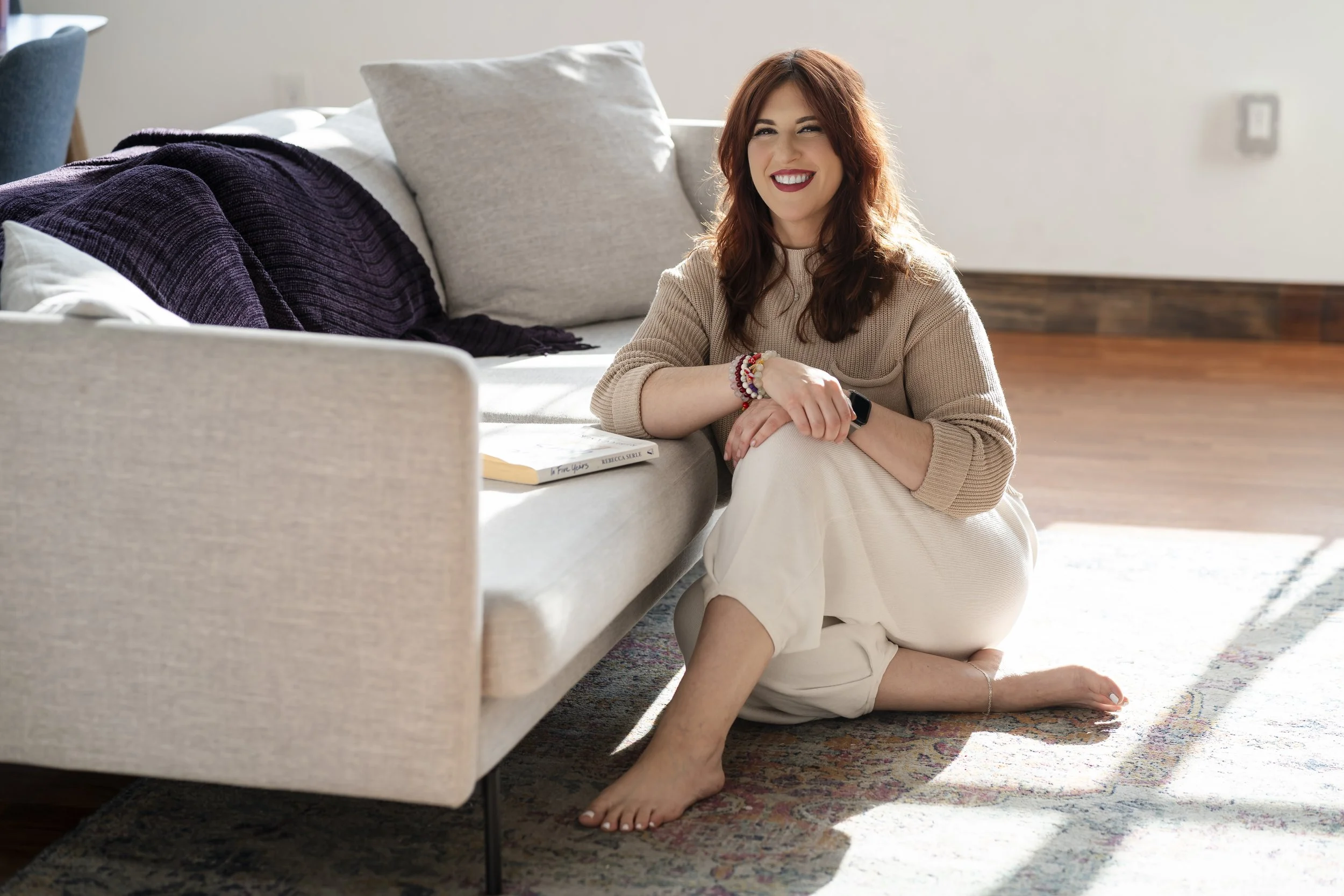
One-on-one therapy sessions
Our online anxiety therapy sessions are $200 per session. Commit to your goals and save up to 20% with packages of 10-20 sessions.

Get Curious. Get Support.
4 Attachments (blueprints): which one feels like home?
Anxious attachment often develops when care was inconsistent. It was sometimes warm, sometimes not, in ways that felt unpredictable. The strategy that formed: stay close, stay alert, don't relax until you're sure everything is ok. As an adult, this can look like needing frequent reassurance, reading into every delayed text, or a low hum of relationship anxiety even when nothing is wrong. *fear of abandonment? This is you.
Avoidant attachment often develops when emotional needs weren't met, or were met with discomfort. The strategy: handle it yourself, don't expect too much, keep enough distance that you can't be let down. As an adult, this can look like discomfort with closeness, needing a lot of space, or feeling suffocated when someone gets emotionally close, even someone you genuinely care about. *sabotaged the perfect romance with zero good reason? This is you.
Disorganized attachment often develops when the same person who was your source of comfort was also, sometimes, a source of fear or unpredictability. The strategy is contradictory on purpose: want closeness and fear it at the same time. As an adult, this can look like push-pull dynamics, not trusting your own read on relationships, or oscillating between wanting someone close and needing them gone. *hot and cold connections with the same person? This is you.
Secure attachment develops when care was consistent enough and responsive enough that you learned relationships are generally safe, people can be trusted, and asking for what you need doesn't end the relationship. *If this one made you laugh out loud: welcome, you're in the right place. Secure is also where the work takes you, not just where some lucky people started.
Common Symptoms of Old Blueprints/Unhealthy Attachments
When I say “unhealthy attachment,” I simply mean that your bonds in early childhood harmed you in very specific ways. In the wild and in every day life, here’s how those unhealthy blueprints show up and sabotage you:
● A delayed reply can reroute your entire day. you've written the breakup story before they've even seen the message.
● You pick fights right when things start feeling good, like your nervous system needs to check the floor is solid and this person won’t leave when things get tough.
● "Are we okay?" is a load-bearing phrase in your relationships.
● You crave closeness right up until you get it, at which point you urgently need a weekend alone.
● You've left relationships that were actually good because they felt boring, and only later wondered if "boring" meant "calm."
● You've stayed in relationships that didn't meet your needs because the inconsistency felt weirdly normal, like home.
● You track certain people's moods like a meteorologist: forecasting, bracing, adjusting your plans accordingly; it’s like walking on egg shells.
● You don't fully trust your own read: are they pulling away, or are you spiraling? You genuinely can't tell anymore and it’s ruining relationships.
● You're the "chill" one in relationships, and it's a full-time acting job to be “cool girl” all the time.
● You reread old conversations in text and fixate on the thing you said to destroy the whole thing.
If half that list broke your heart: welcome. You're in exactly the right place, and we can tend to that aching heart.
Familiar Ain’t Always Safe
Here's the sneakiest thing an old blueprint does: it doesn't just shape how you act in relationships. It shapes what feels right.
If home was chaotic, calm can feel like something's missing. Picture you meet someone consistent and kind and your body registers "no spark," because the spark you're used to is actually adrenaline. If home was distant, someone attentive can feel like too much. If love always came with conditions, unconditional can feel suspicious, like you're waiting for the invoice. So you leave good relationships because they don't feel like home, and you stay in depleting ones because they do. Your picker isn't broken. It's calibrated to the past!
This is also why you can't think your way out. You've probably already diagnosed your pattern at 2am with impressive accuracy, and it changed nothing, because insight alone doesn't recalibrate a nervous system. New experiences do: small, repeated ones, where closeness happens and nothing bad follows. That's the actual work, and it's slower than a breakthrough and a hundred times more durable.
Sassy truth: nothing is wrong with you. Your blueprint was drafted by a little girl doing her absolute best with the relationships she was handed. We're not going to shame her for the design. We're going to thank her, show her the updated safety data, and let her put the pen down.

Therapy for Attachment FAQ
-
We meet virtually via video or phone from wherever you are in New Jersey or Pennsylvania. Together we map your blueprint from your actual relationship history, spot where it's running the show now, and practice new responses in real time — including in the therapy relationship itself, which is half the magic. Then Homeplay carries it into your real life between sessions.
-
Def not. This work isn't a trial and nobody's getting subpoenaed. Most caregivers were doing their best with what they had, often while running their own unexamined blueprints — attachment patterns are the ultimate hand-me-down. Understanding how yours got drafted is about ending the chain, not building a case.
-
The quiz gave you a label; the work gives you a change. Knowing you're "anxious-avoidant" is like knowing your house has bad wiring — genuinely useful, and also the lights still flicker. We use your real history and real relationships, not multiple choice, and then we actually rewire.
-
Yes, and this is the best news in the entire field: researchers call it "earned secure" attachment. Your nervous system built the old blueprint from experience, which means it can build a new one from experience too. It takes repetition, not luck — enough new moments where closeness happens and the ceiling doesn't fall.
-
Extremely common — anxious and avoidant famously find each other like magnets, and then drive each other up the wall. You working on your side changes the whole dance, because a pattern needs two people running old strategies to keep its rhythm. And no, your partner doesn't have to be in therapy for your work to move the needle.
-
Because homework is WORK and this is practice, not another performance review. Homeplay is small, specific experiments between sessions: sitting with the urge to send the fifth "are we okay?" text, staying present one extra minute when you'd normally withdraw, letting someone do something kind for you without deflecting. New data, delivered gently.
-
Your attachment style isn’t a life sentence.
The patterns that formed early were adaptive. They made sense given what you were working with. But they're not the only way to do relationships, and they are not permanent. With enough new experiences, your nervous system can learn a new blueprint — one based on what's actually true now, not what was true then.
So here's the practice: next time you feel that familiar pull — reaching for reassurance, pulling away, picking a fight right when things feel good — pause and ask one question: is this about what's happening right now, or is this an old strategy showing up in a new room? You don't have to answer perfectly. You don't even have to change anything yet. Just asking creates a little space between the pattern and the reaction — and that space is where every new blueprint gets drawn.
Ready to understand the pattern instead of just living inside it?
Not ready to book?
The Heard Woman on Substack is where I write about the stuff that brought you here — the people-pleasing, the anxiety, the relationships that leave you feeling invisible. Start there, see what lands, and when you're ready to go deeper, the call is waiting.
Follow me on Substack: The Heard Woman